Modern Influences
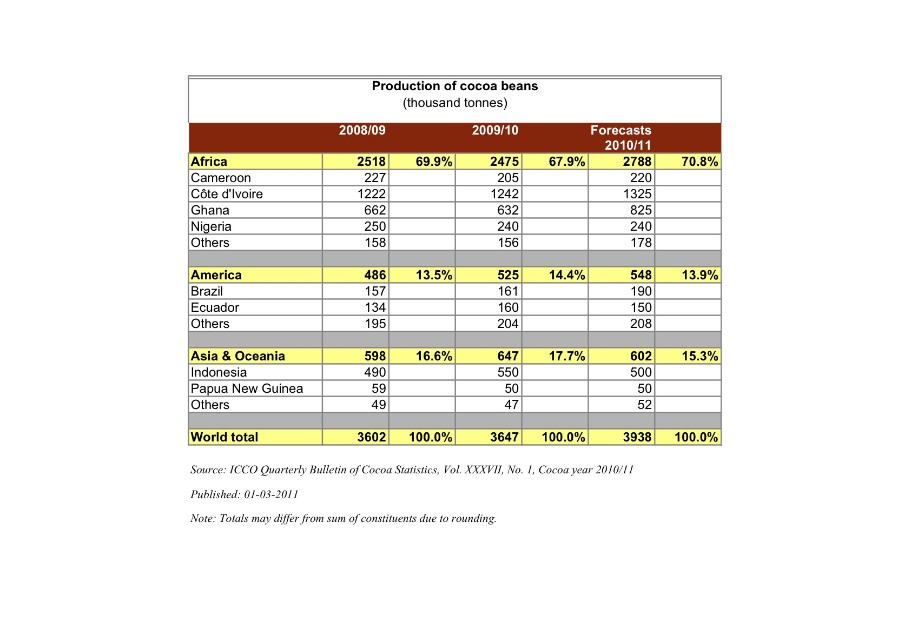
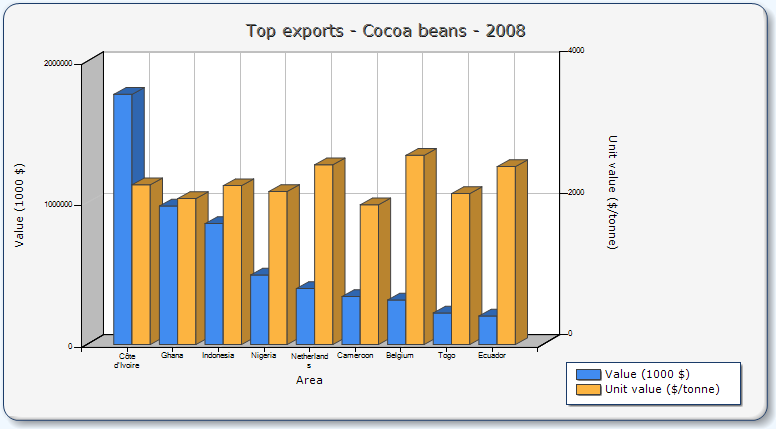
Though indigenous to the Americas, cacao trees are now cultivated around the world by 5 to 6 million farmers growing beans and manufacturing chocolate products on 4.5 million farms (Howell, 2009; WCF). Worldwide, 20 to 50 million people depend on the cultivation of the cacao tree and production of its fruit as the process goes from farmer to exporter to shipper to processor to consumer (WCF). The annual market value of a cacao crop is approximately 5.1 billion dollars with the bulk of production (70%) in West Africa (Food and Agriculture Organization of the United Nations [FAO], 2001; WCF, 2009). As of 2007, the top 5 countries and the amounts of cocoa products they consume, measured in tons per year, are listed below (FAO):
1. United States of America - 749,315 2. France - 238,959 3. Germany - 192,625 4. Russian Federation - 178,517 5. Japan - 165,547 | 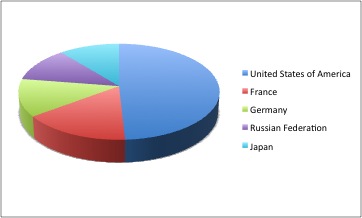 |
The result from the success in African cultivation of cacao trees led Ghana to quickly surpass the New World production and dominate the English and European markets during much of the 20th century, though this is now led by Côte d’Ivoire (ICCO, 2011). Fernando Po Island (now known as Bioko that is part of Equatorial Guinea) still produces 8000 tons of cocoa annually, which accounts for 70% of the country’s export earnings (West, 1996).
The lasting effects of products from the cacao tree can be seen in modern everyday life and items. In literature, authors Jorge Amado, Charles Dickens and Roald Dahl, as well as the playwright George Bernard Shaw integrate chocolate heavily. Though currently only very prevalent in the United States and Europe, the celebration and use of chocolate on Valentine’s Day and Easter is gaining popularity worldwide. Artists soon began to incorporate the products of, and consumption of, cacao beans into paintings. The most famous is La Belle Chocolatière by Jean-Étienne Liotard. It became the cover art for Baker’s Chocolate in the United States (West, 1996). The roasted cacao beans, used to make chocolate, provides most of the substances required for human nutrition (Cheney, 1993): - 50% fat - 20%-25% carbohydrates - 15%-20% protein - 15% alkaloid theobromine - 5% moisture - 3.5% ash made up of the minerals calcium, iron, magnesium, potassium, sodium and cacao-red coloring Because of the inherent nutrients within cacao products, it has been used in many “healthful” capacities. Chocolate bars, called cocoa issue, CI, or “kye”, were used as rations in the Royal British Navy from approximately 1780 until 1968, when they were replaced by cocoa powder (West, 1996). Chocolate also made history by becoming a ration on Antarctic expeditions in the early 20th century. Pure cocoa made with half cocoa butter made for high-energy output per unit of weight of food. Some have speculated that the success of Roald Amundsen’s South Pole expedition over Robert Scott’s was due to Amundsen’s expedition having 120 grams of calorie intake from cocoa out of a total of 4,560 they were allowed. Scott’s expedition only had 24 grams from cocoa from a total of 4,430 calories (West, 1996). Consumption of chocolate, which has increased 3%-4% annually for the last 100 years, now includes additives of chili peppers, bacon, mushrooms and wasabi and has been attributed to many health benefits such as lowering blood pressure, promoting healthy blood flow through the arteries, improving dementia, and aiding in diabetes and breast cancer (Howell, 2009; West, 1996; Young, 2007). This not only is to the healthy fats in the cocoa butter, but also to the large amounts of flavonoids, which are powerful anti-oxidants (thought to help the body resist damage from free radicals) present in cacao beans. Some studies have shown that these flavonoids help inhibit low-density lipoprotein cholesterol (ICCO). Other uses for cacao tree products are as additives to tobacco and chewing gum (West, 1996). Also, cocoa butter is an important by-product of the cocoa process in that it is useful in pharmaceuticals due to its blandness and freedom from becoming rancid (Cheney, 1993). |  Tin of Baker's Breakfast Cocoa featuring La Belle Chocolatière by Jean-Étienne Liotard 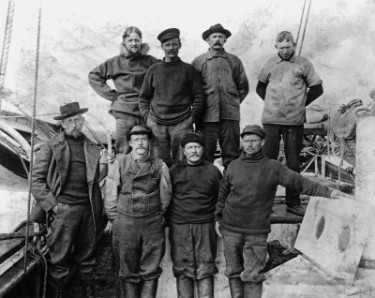 Roald Amundsen and his crew aboard the Gjøa 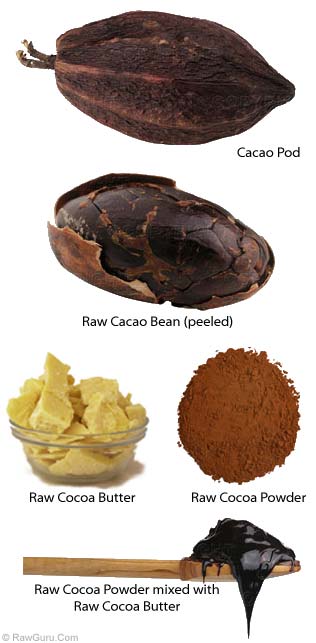 Cocoa process chart |
